


Unveiling the Canine “Sixth Sense”: Biology, Not the Supernatural
The internet is awash with captivating videos showcasing dogs performing seemingly extraordinary feats, from heroic rescues to uncanny predictions of impending events. These clips often fuel the belief that our canine companions possess a mystical “sixth sense,” an almost supernatural ability to perceive things beyond human comprehension. But what lies at the heart of these remarkable behaviors? Is it genuine clairvoyance, or are these instances rooted in the sophisticated biological capabilities of dogs, amplified by human interpretation and the pervasive influence of social media?
The allure of a profound, almost telepathic bond with our pets is undeniable. This deep emotional connection, coupled with the human tendency towards confirmation bias, often leads us to attribute extraordinary significance to our dogs’ actions. We tend to remember the times a dog’s behavior appeared to precede an event, while overlooking the countless occasions where similar reactions occurred without any subsequent incident. This selective recall, driven by a desire to believe in our pet’s unique abilities, solidifies the myth of canine supernatural powers.
The Power of Superior Senses: A Biological Advantage
The reality is that dogs possess sensory organs that far surpass our own. Their auditory range extends to much higher frequencies than humans can perceive, and they are acutely sensitive to vibrations, subtle changes in air pressure, and atmospheric shifts. Perhaps most astonishing is their olfactory prowess: a dog’s sense of smell is estimated to be between 10,000 and 100,000 times more potent than that of a human.
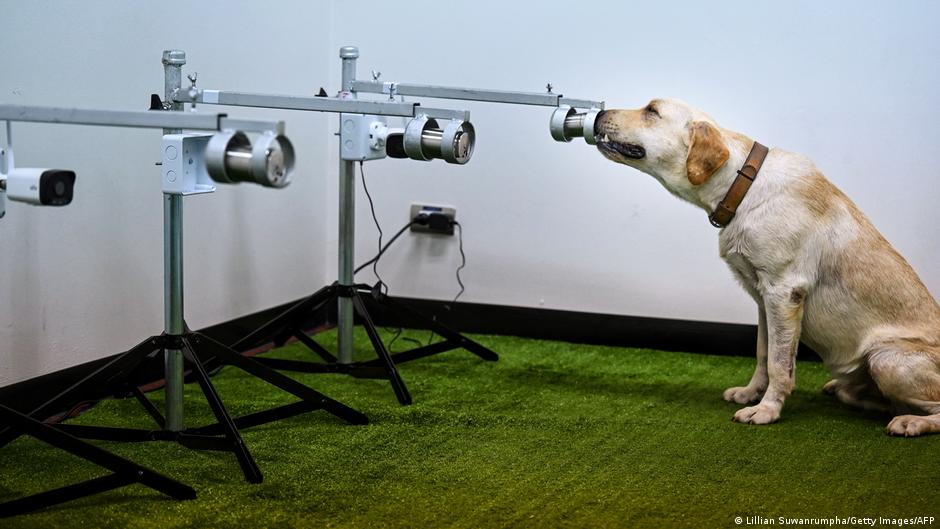
This biological advantage allows dogs to detect biochemical changes in the human body that are imperceptible to us. Scientific studies have demonstrated their ability to identify the faintest molecular alterations in sweat or breath, making them invaluable in the early detection of conditions such as epilepsy, diabetes, and even certain cancers. Furthermore, dogs are highly attuned to the emotional states of their human caregivers. They can register minute shifts in behavior, such as muscle tension, alterations in breathing patterns, and the distinct scent of stress hormones.
A notable study conducted at Queen’s University Belfast involved family dogs reacting distinctly to sweat samples from epilepsy patients taken just before a seizure, compared to control samples. This highlights their capacity to detect physiological precursors to medical events. Similarly, assistance dogs trained for individuals with diabetes or cancer are not guided by supernatural forces. Instead, they are adept at recognizing and responding to physiological signals like changes in heart rate, breathing rhythm, stress hormone levels, and specific volatile organic compound (VOC) patterns that can indicate a person’s health status.
Deconstructing the “Sixth Sense”: A Scientific Perspective
Renowned canine behaviorist Stanley Coren, from the University of British Columbia, has been a pioneer in understanding canine intelligence and behavior. His research, including the development of the “Stanley Coren Index” for assessing breed intelligence, reveals that the average dog comprehends around 165 words, with highly intelligent breeds understanding up to 250 – a cognitive capacity comparable to that of a two-and-a-half-year-old child.
Coren attributes many of the so-called “supernatural” predictions of disasters or accidents to the dogs’ extraordinary sensory organs. He explains that what appears to be a premonition is often a reaction to stimuli that are already present but beyond human perception. For instance, dogs might hear the initial, faint sounds of geological shifts preceding an earthquake, sounds well below the human hearing threshold. They can also detect heat sources with a sensitivity akin to infrared sensors and perceive minute instabilities or vibrations through highly sensitive touch receptors in their paw pads. This explains why a dog might become agitated before a bridge begins to sway or a vehicle skids on a slick road. In essence, the “sixth sense” is a physiological advantage, allowing dogs to react to existing stimuli much earlier than humans.
Beyond Prediction: The Limits of Canine Perception
While dogs possess remarkable sensory capabilities, their ability to predict complex events like car accidents is largely a myth. Other species also exhibit sensory abilities far exceeding those of humans. Research involving cows, sheep, and dogs equipped with sensors in Italy showed significantly increased activity before several earthquakes, particularly among animals housed in stables. This heightened activity was attributed to their reaction to micro-vibrations or electrical changes in rock layers, not a premonition.
As explained by Martin Wikelski of the Max Planck Institute of Animal Behavior, these are reactions to physical stimuli, not a forewarning. Wikelski emphasizes the need for empirical data to differentiate between myths and genuine canine abilities, stating that anecdotal evidence requires verification through scientific studies, similar to their work on earthquakes and volcanic eruptions.
The vast majority of incidents attributed to a dog’s “sixth sense” can be explained by coincidence, retrospective interpretation, or the dog’s heightened sensitivity to real, albeit subtle, stimuli. Dogs can detect unusual noises, the screech of tires, faint traces of smoke, or their owner’s anxiety seconds before these become perceptible to humans. When a dog exhibits stress behaviors like panting or whining in response to these subtle cues, it is easily misinterpreted as an early warning of impending danger in hindsight. The key takeaway is that while our canine companions are incredibly perceptive, their remarkable abilities are rooted in biology, not the supernatural.














Discussion about this post