


Unveiling the Enduring Legacies of Two South Korean Presidents
Recent discoveries have shed new light on the twilight years of South Korea’s first president, Syngman Rhee, revealing the personal toll of political exile and the complex relationship he shared with his successor, Park Chung-hee. Letters penned by Rhee’s wife, Franceska, unearthed by the Rhee Syng-man Presidential Memorial Foundation at the U.S. Library of Congress, offer poignant details. One such letter, dated November 1962, describes an ailing Rhee, confined to bed, finding solace in a new painkiller named Robaxi-Sal and consuming baby food.
This abrupt decline in Rhee’s health was deeply intertwined with the abrupt halt to his planned return to his homeland. His departure for Hawaii on May 29, 1960, was intended as a brief respite, not an extended exile. He reportedly packed only a few suitcases, anticipating a swift return after a few weeks of rest. Driven by a profound desire to set foot on Korean soil once more before his passing, Rhee, along with Franceska and close associates, had set March 17, 1962, as the date for his homecoming. However, on the very morning of their planned departure, as preparations were finalized, a stark message arrived from the Hawaiian consulate: the South Korean government advised against his return, citing a desire to “discourage his return.” The 87-year-old Rhee was hospitalized on that same day.
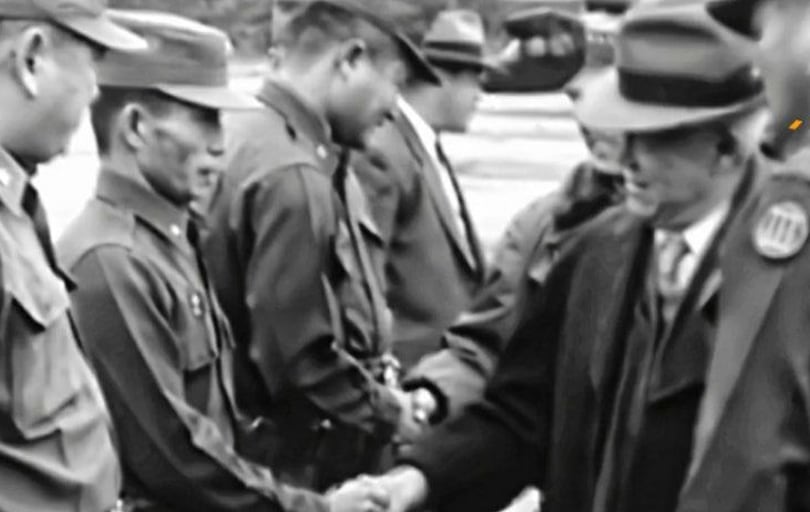
The individual instrumental in blocking Rhee’s repatriation was Park Chung-hee, who at the time held the powerful positions of Chairman of the Supreme Council for National Reconstruction and Acting President. Park harbored a decidedly negative view of Syngman Rhee, seemingly holding him in contempt. He publicly denounced Rhee as a “dictator with clouded vision.” The animosity was so profound that immediately following the March 15, 1960, election, which many viewed as rigged, Park Chung-hee had allegedly plotted a military coup to remove Rhee from power.
This animosity has led some observers to question the apparent overlap in the supporter bases of these two leaders. As one commentator mused, “Park Chung-hee did not seek to inherit Rhee Syng-man. He hated and sought to overcome him. Then why do their supporters overlap? It’s truly baffling.” However, a deeper historical perspective suggests that personal sentiment may be less significant than the enduring historical impact of these two pivotal figures. Syngman Rhee and Park Chung-hee, each emblematic of their respective eras and administrations, contributed to a discernible “continuity” in the trajectory of South Korean history – a continuity that often becomes apparent only with the passage of considerable time.
Examining the “Revolutionary Fault Line” and Enduring Continuities
Professor Kim Myeong-seop of Yonsei University’s political science and diplomacy department has offered insightful analysis on this complex historical dynamic. A seminar held on February 23, 2024, titled ‘Founding and Enriching Presidents, Rhee Syng-man and Park Chung-hee’s Modern Political Historical Significance,’ co-hosted by Yonsei University’s Rhee Syng-man Research Institute and the Park Chung-hee Presidential Memorial Foundation, delved into these connections.
A clear “revolutionary fault line” separates the Rhee Syng-man administration (1948–1960) from the Park Chung-hee administration (1961–1979). This divide was primarily shaped by the seismic shifts of the April 19 Revolution and the May 16 coup, which fundamentally altered the nation’s power structure. A key distinction lay in the mainstream forces that propelled each administration. Rhee’s government was largely comprised of a select group of independence activists and elites who had risen to prominence during the Japanese colonial era. In contrast, Park’s administration drew heavily from elites educated within South Korea during Rhee’s tenure or those who had pursued studies abroad.
Furthermore, Park orchestrated a deliberate purge of Rhee-era figures. He notably disregarded the “nobility of liberation” associated with the Liberal and Democratic parties, whose political ascendancy was often based on vaguely defined credentials as independence activists. Instead, Park actively promoted individuals who, in historical memory, could be considered rivals to Syngman Rhee. This was evident even as he opposed Rhee’s return from Hawaii; Park simultaneously commissioned a statue of Kim Koo on Namsan and orchestrated the relocation of Ahn Chang-ho’s grave to Gangnam, where Dosan Park was established in his honor.
Despite these overt attempts at differentiation and even negation, a powerful current of continuity flowed between Rhee and Park:
- Unyielding Anti-Communist Ideology: Both leaders were staunchly anti-communist, a defining characteristic of their foreign and domestic policies.
- Building an Anti-Colonial Model: They steered South Korea towards becoming a model nation aligned with the global capitalist bloc, seeking to break free from colonial legacies.
- Strengthening South Korea-U.S. Relations: The foundation of the alliance between South Korea and the United States was a cornerstone of both administrations.
- Maintaining the Armistice System: Amidst the global Cold War, they prioritized the maintenance of the armistice system to ensure continued peace on the Korean Peninsula.
- Promoting Diligence and Virtue: Both leaders emphasized the importance of a simple, diligent, and virtuous populace as essential for national progress.
- Military Support Abroad: Rhee’s administration’s initial efforts to dispatch troops to Indochina, such as Laos, foreshadowed Park Chung-hee’s significant commitment to the Vietnam War.
- Aspiration for Unification: The overarching goal of national unification remained a persistent aspiration throughout both presidencies.
It is important to acknowledge that negative continuities also existed, such as the political instability that followed constitutional amendments allowing for extended terms and communication breakdowns that plagued the later stages of their tenures.
Professor Kim Myeong-seop summarized the enduring legacy by highlighting the continuous emphasis on “national defense” during the Rhee and Park eras. He argued that subsequent industrialization and democratization efforts were built upon the bedrock of national security established during their leadership. He posed a critical question: “Is there anything more important in South Korea’s history?” He further elaborated, “Like other presidents, these two also had political faults. However, without remembering their positive continuity, it’s impossible to explain how today’s ‘K-model’ became possible for the world.”
Ultimately, the narrative of modern South Korean history can be understood as a tripartite spiral, intricately woven from three fundamental threads: national defense, nation-building and economic development, and industrialization and democratization.
Shared Vision and Enduring Patriotism
Both Syngman Rhee and Park Chung-hee, leaders forged in the crucible of war and hardship, shared a fundamental self-perception: they viewed themselves as “revolutionaries” actively combating entrenched conservative interests. Their legacies, therefore, might be more accurately characterized not as “conservative right-wingers” but as “progressive right-wingers” who actively pursued societal change.
A particularly striking sentiment from the aforementioned seminar resonated deeply: “If we view Kim Il-sung, Park Hun-young, Mao Zedong, and Ho Chi Minh positively while remembering Rhee Syng-man and Park Chung-hee, who fought against communism, only by selecting their faults and excluding their merits, can this truly be fair?”
From this perspective, Syngman Rhee laid the foundational stones of liberal democracy, upon which Park Chung-hee subsequently constructed a “nation never before experienced” for all its citizens. Rhee, in a manner reminiscent of Sang Yang of the Qin dynasty who was ultimately consumed by the very laws he enacted, stepped down from power due to the liberal democracy he had painstakingly established. Park Chung-hee, years later, faces criticism from a generation that, perhaps mistakenly, takes the nation’s current prosperity for granted: “Why did you abandon democracy under the pretext of economic development?”
The undeniable fact remains that both Syngman Rhee and Park Chung-hee pursued paths that led to de facto lifelong rule, a clear departure from democratic ideals. However, it is equally undeniable that neither the liberal democratic system nor the remarkable “Miracle on the Han River” materialized spontaneously. Professor Kim Myeong-seop’s presentation also alluded to a commonality between the two leaders that perhaps eluded strict academic categorization: patriotism. This was not a blind nationalism or a directionless fervor, but a deeply pragmatic form of patriotism that involved formulating and implementing concrete, forward-looking designs for the nation’s future.









Discussion about this post