


Councillor’s Virtual Meeting Conduct Under Scrutiny Amidst Driving Allegations
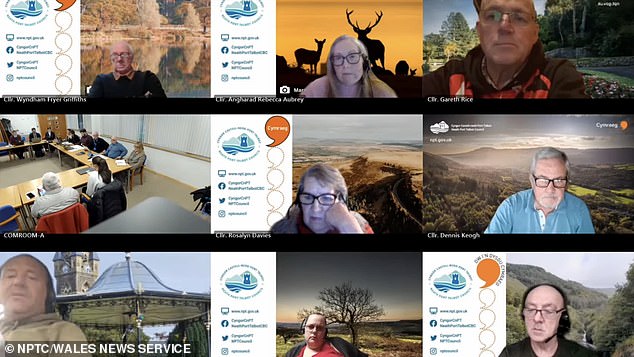
A local councillor has found himself at the centre of a public discussion regarding his conduct during a virtual council meeting, specifically concerning his participation while allegedly driving. The incident, which occurred in January, involved Councillor Dean Lewis, an independent representative for Neath Port Talbot, attending a planning committee session via Microsoft Teams.
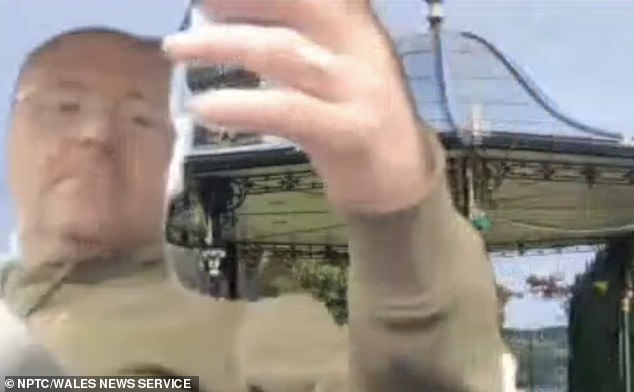
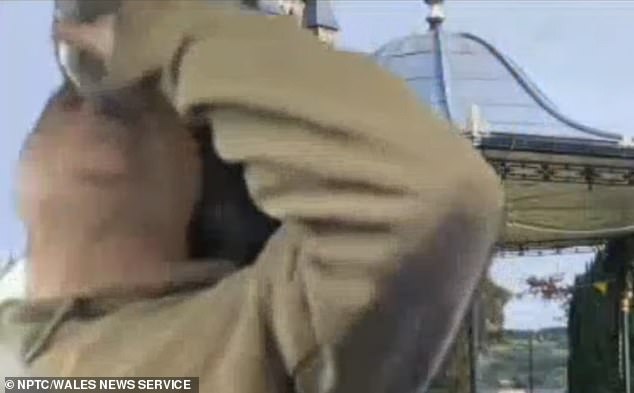
During the online meeting, which was discussing an application for holiday homes between two villages, Councillor Lewis was observed on camera. Footage showed him wearing a seatbelt and actively changing gears in his vehicle. Notably, his mobile phone was positioned in his car’s cupholder, and he appeared to be taking a drink while speaking.
This is not the first time Councillor Lewis has faced scrutiny for his driving. He was previously suspended as a councillor for a period of four months following a drink-driving conviction.
Councillor’s Defence and Ombudsman Referral
Councillor Lewis has described the recent incident as “ridiculous” and “blown out of proportion.” He explained that for the majority of the meeting, he was stationary in a car park and not driving. He stated his intention was to drive to a clock-in station towards the end of his shift. He further claimed that he was driving on private land at the time of the meeting and that his phone was in the cupholder merely to allow him to listen in as “background noise.”
Despite his assertions, Councillor Lewis acknowledged that his actions might be viewed unfavourably. Consequently, he referred himself to the Public Service Ombudsman for Wales following the January meeting. However, the Ombudsman subsequently decided to take no further action in the matter.
Councillor Lewis elaborated on his perspective, telling reporters, “I just think it’s ridiculous. It’s all been blown out of proportion. The reason why it hasn’t gone any further is because when I was driving, I was driving on private land at work. For 90 per cent of the meeting I was sat down in a car park, not driving. Coming towards the end of my shift, I thought, right, OK, I’m going to drive up to the clock-in station.”
Council’s Stance and Procedural Framework
A spokesperson for the council confirmed their awareness of the footage from the January 20th planning committee meeting and the issues that had been raised. They reiterated that the Ombudsman had concluded its review and informed the council that no further investigation would be undertaken.
The council’s statement also highlighted its operational procedures. “Council meetings are conducted in accordance with the council’s constitution and relevant procedural rules,” the spokesperson stated. “The council’s arrangements allow for remote participation by members, and the procedures do not include specific provisions relating to the location from which a member may join a meeting. Participation in meetings remains subject to compliance with applicable legal and safety requirements.”
Echoes of Past Incidents
This event brings to mind a similar situation that occurred approximately three years prior. In July 2023, a councillor in North Wales admitted to participating in a virtual council meeting while driving his car. Councillor Andrew Wood, then an independent member of Conwy Council, was labelled “completely reckless” for his actions. Like Councillor Lewis, he also faced no further action from the Public Services Ombudsman.
Councillor Lewis, who has represented the areas of Resolven and Tonna at Neath Port Talbot Council since 2019, continues his role as a council member. The recurrence of such incidents raises ongoing questions about the practicalities and safety considerations of remote participation in council meetings, particularly when members are engaged in activities that could potentially compromise their attention or adherence to driving regulations. The council’s reliance on general legal and safety requirements, rather than specific rules for remote meeting locations, means that the interpretation and enforcement of these standards remain a point of discussion.















Discussion about this post